What are you looking for?
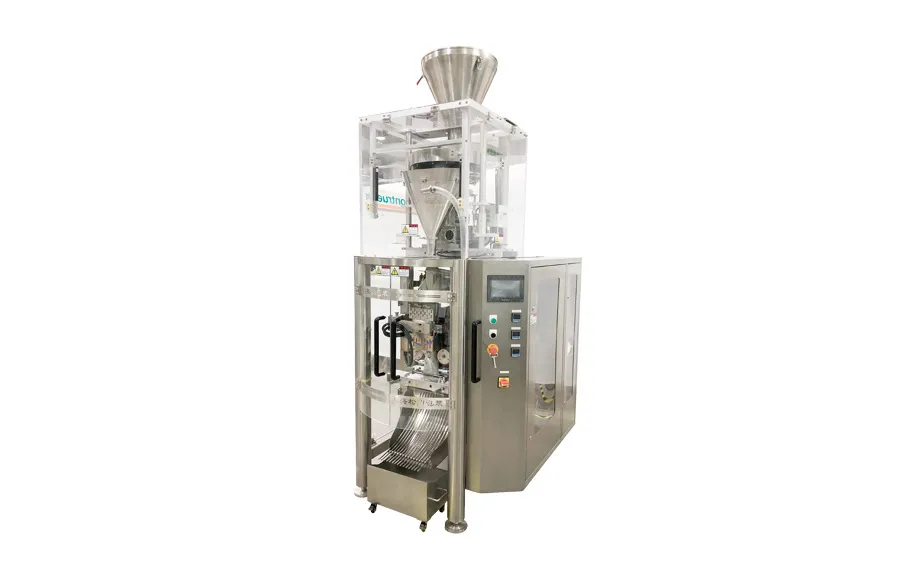
Investing in a VFFS machine is one of the most impactful decisions you can make for a small-bag packaging operation. To put it directly: a VFFS machine (Vertical Form Fill Seal) is a fully automated packaging system that forms bags from roll film, fills them with your product, seals them, and cuts them — all in one continuous, hands-free process. If you’re packaging granules, powders, or similar bulk materials into small bags at scale, this technology is almost certainly the most efficient and cost-effective solution available today.
But not every VFFS system is built the same, and buying the wrong machine for your application is an expensive mistake. This guide walks you through everything you need to evaluate before committing.
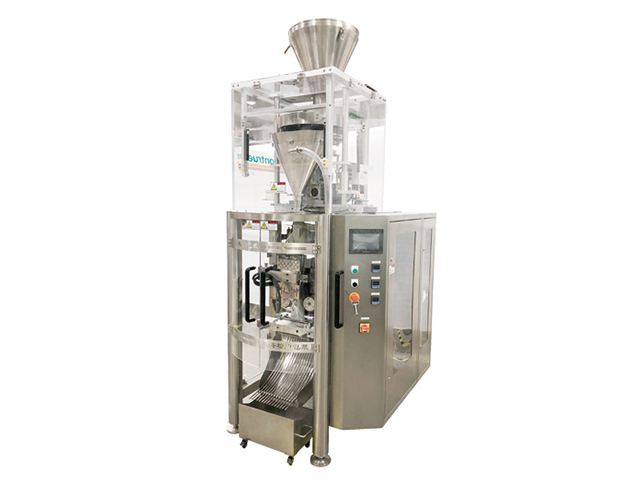
Let’s start with the basics. VFFS machine full form stands for Vertical Form Fill Seal. The name describes exactly what the machine does and how it does it:
Vertical — the bag is formed vertically, with roll film fed in from the top of the machine
Form — the flat film is shaped into a tube and then into individual bags using a forming collar
Fill — product is dispensed into the bag from a hopper positioned above
Seal — the bag is sealed longitudinally (along the sides) and transversely (across the top and bottom)
After sealing, the bag is cut and discharged. The entire sequence — bag-making, metering, filling, coding, longitudinal sealing, transverse sealing, and cutting — runs automatically without any manual intervention. That’s why VFFS machines are considered the most mainstream fully automatic packaging equipment for small bags of granules and powders in industries around the world.
Understanding the operational flow helps you evaluate whether a given machine suits your production setup. Here’s the standard sequence:
Roll film loading — A roll of flat packaging film is loaded at the top of the machine
Vertical forming — The film is pulled downward and shaped into a tube around a forming tube/collar
Longitudinal sealing — A vertical seal is applied along the length of the tube to close it into a continuous bag sleeve
Metering and feeding — The product is weighed or volumetrically measured and dispensed into the bag from above
Transverse sealing — Horizontal seals are applied at the top and bottom of each bag
Coding — Batch numbers, dates, or barcodes are printed during the process
Bag cutting — Each individual bag is cut from the continuous film sleeve and discharged
The beauty of this system is that every step happens in sequence on a single piece of equipment. There’s no separate bag supply chain, no manual bag opening, and no operator required to stand at the machine for each cycle.
This is the most critical starting point. VFFS machines are designed to handle both granular and powder materials, but the specific configuration matters.Free-flowing granules — like plastic pellets, seeds, salt, or pet food — are generally straightforward to handle. Fine or dusty powders, on the other hand, require specific considerations: proper degassing, dust-proof sealing mechanisms, and sometimes modified filling systems to prevent bridging or air entrapment.Before you speak to any supplier, know your material’s bulk density, particle size, flow characteristics, and any sensitivity to moisture, static, or contamination.
VFFS machines typically handle small-format bags, which is what distinguishes them from FFS systems designed for 50g-5 kg industrial bags. Common small-bag applications run anywhere from a few grams up to several kilograms per bag.Make sure the machine you’re evaluating supports your target bag width, length, and weight range. Check not just the maximum capacity but also the minimum — some machines don’t perform well at the lower end of their stated range.
How many bags per hour does your operation actually need? This number should be driven by your downstream requirements — conveying, secondary packaging, palletizing — not just the machine’s maximum rated speed.Oversizing your VFFS machine creates bottlenecks elsewhere. Undersizing means the equipment becomes your production ceiling. Work backwards from your daily or shift output targets to arrive at a realistic speed requirement.
VFFS packing machines can produce several bag styles depending on the forming collar and sealing configuration:
Pillow bags — the most common, formed from a single film roll
Gusseted bags — side gussets added for a more block-like shape
Quad-seal bags — four-sided sealed bags for premium presentation
Stand-up pouches — require additional equipment or specialized configurations
Check which bag styles the machine supports and whether it can handle your preferred film materials — PE, PP, laminated films, kraft-PE combinations, and others all have different sealing temperature requirements.
The accuracy of your fill weight directly affects product giveaway, regulatory compliance, and customer satisfaction. Different metering systems suit different products:
Multihead combination weighers — ideal for irregular granules, high-speed applications
Auger fillers — best for fine powders and materials that need controlled dispensing
Volumetric cup fillers — simpler, lower cost, suitable for uniform granules
Single or twin-screw feeders — used for poor-flowing powders
Ask specifically about weighing accuracy — look for systems with tight tolerances, ideally ±1–2‰, to minimize variance across high-volume runs.
A fully automatic VFFS machine should integrate cleanly with your upstream and downstream systems: bulk material storage and conveying, checkweighers, metal detectors, labeling stations, secondary packaging, and palletizing lines.
Ask suppliers about their control systems, PLC brands, HMI interfaces, and compatibility with your existing factory automation infrastructure. Remote diagnostics and data logging capabilities are increasingly important for modern production environments.
VFFS machines are generally more compact than FFS bagging systems, but you still need to account for the full system footprint — including film roll loading access, product hopper height, operator access panels, and maintenance clearance.
Some automatic packaging machine manufacturers offer compact configurations specifically designed for tighter workshop layouts, which can be a deciding factor if floor space is limited.
VFFS machines are the backbone of small-bag packaging across a wide range of sectors:
Food and food chemicals — snacks, sugar, salt, flour, spices, additives
Pet food and animal feed — kibble, treats, mixed feeds
Agriculture — seeds, crop protection granules
Chemical and pharmaceutical — powdered additives, fine chemicals
Salt chemical industry — industrial salt products
The versatility of the system — combined with its high degree of automation — makes it a strong fit for any industry where consistent, high-volume small-bag output is required.
Before finalizing any purchase, make sure you get clear answers to the following:
What is the guaranteed output speed for my specific material and bag weight?
What is the weighing accuracy under normal production conditions?
What film types and bag styles does this machine support?
What does the after-sales service and spare parts availability look like in my region?
Can I see a live demonstration or factory acceptance test with my actual product?
What training is provided for my operators and maintenance team?
How long is the warranty and what does it cover?
A reputable manufacturer will welcome these questions. If a supplier is evasive about demonstrated performance data, that’s worth paying attention to.
A VFFS machine is not a commodity purchase — it’s a long-term production asset that will shape your output capacity, operating costs, and product quality for years. The right machine, matched properly to your material, bag format, and volume requirements, pays for itself quickly. The wrong one creates daily frustration and ongoing inefficiency.
Take the time to evaluate your requirements thoroughly, compare multiple suppliers, and insist on real-world performance data before making your decision. Soontrue’s VFFS systems are purpose-built for granule and powder applications, backed by over 30 years of packaging machinery experience and more than 800 patents — a strong foundation for any serious packaging operation.
Q: What is VFFS machine full form?
A: VFFS machine full form is Vertical Form Fill Seal. It describes a fully automated packaging machine that vertically forms bags from roll film, fills them with product, seals them longitudinally and transversely, and cuts them into finished bags — all in one continuous automated process.
Q: What is the difference between a VFFS machine and an FFS packaging machine?
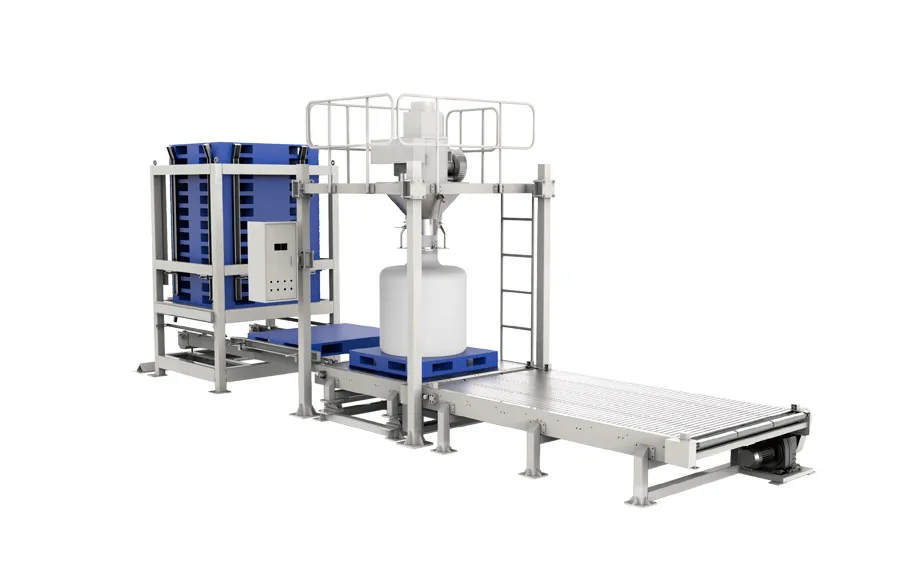
A: Both are Form-Fill-Seal technologies, but they differ in scale and orientation. A VFFS machine is designed for small-format bags (grams to a few kilograms) and forms bags vertically from the top. FFS packaging machines are typically used for large industrial bags in the 10–50 kg range, forming bags from tubular film horizontally or at an incline.
Q: What types of products can a VFFS machine handle?
A: VFFS machines can handle a wide variety of granular and powder materials, including food products (sugar, salt, snacks, spices), pet food, seeds, agricultural granules, chemical powders, pharmaceutical additives, and more.
Q: How fast does a VFFS machine run?
A: Speed varies significantly depending on the machine model, bag weight, and material type. Entry-level systems may produce a few hundred bags per hour, while high-performance models can exceed 1,000–2,000 bags per hour for light granular products.
Q: What bag styles can a VFFS machine produce?
A: Depending on the configuration, a VFFS machine can produce pillow bags, side-gusseted bags, block bottom bags, and in some configurations, stand-up pouches. Pillow bags are the most commonly produced format.
Q: What film materials are compatible with VFFS machines?
A: Most VFFS machines are compatible with PE, PP, laminated films, kraft-PE combinations, and metallized films. The specific film types supported depend on the machine’s sealing system and temperature range — always confirm compatibility with your supplier.
Q: How accurate is the weighing system on a VFFS machine?
A: High-quality VFFS machines achieve weighing accuracies of ±1–2‰ under normal production conditions. Accuracy depends on the metering system used — multihead weighers, auger fillers, or volumetric systems — as well as the flow characteristics of your specific material.
Q: Is a VFFS machine fully automatic?
A: Yes. A fully automatic VFFS machine completes the entire packaging sequence — bag forming, metering, filling, coding, sealing, and cutting — without manual intervention. Operators are typically responsible for loading film rolls, monitoring performance, and handling any exception conditions.
Q: What should I look for when buying a VFFS machine?
A: Key factors include material type and flow characteristics, target bag weight and size, required packaging speed, film compatibility, weighing accuracy, automation and integration capabilities, equipment footprint, and the supplier’s after-sales support and spare parts availability.