What are you looking for?
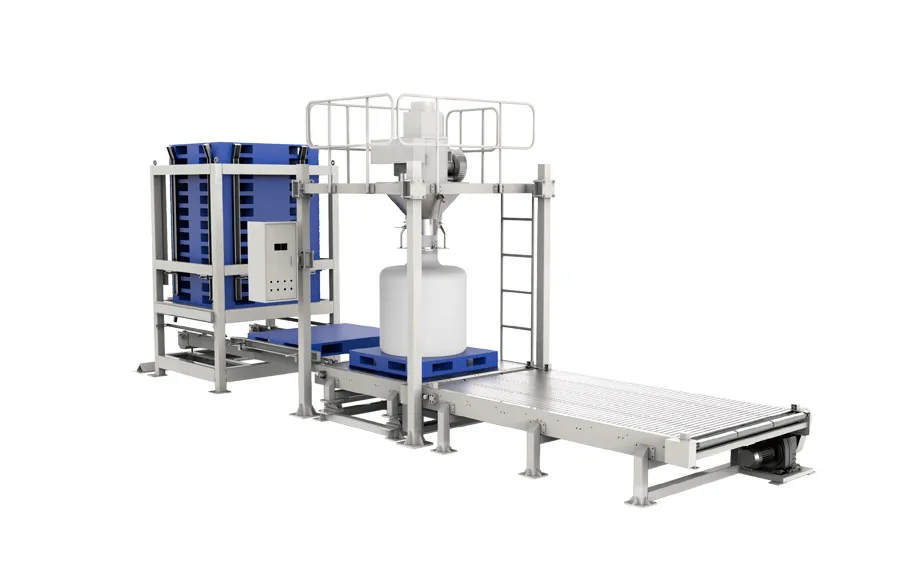
If you’re still relying on manual bagging or older semi-automatic equipment, upgrading to an FFS packaging machine is one of the smartest investments you can make for your production line. In short: FFS technology dramatically increases throughput, cuts packaging material costs, reduces labor dependency, improves dust control, and delivers consistent accuracy — all within a single integrated system. Whether you’re in fertilizer, petrochemicals, food, or animal feed, the case for making the switch is hard to argue with.
Let’s break down exactly why.
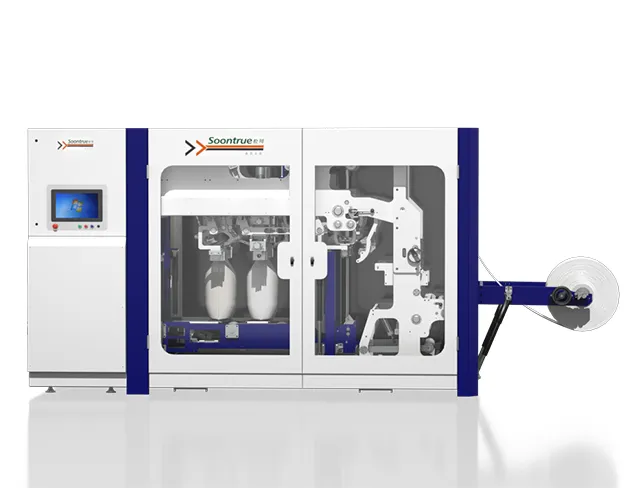
Before diving into the reasons, it’s worth clarifying the terminology. FFS Packing Machine Form-Fill— a fully automated packaging process where the machine forms the bag from a roll of tubular film, fills it with the product, and seals it, all in one continuous operation. There’s no need to source or pre-stock finished bags. The entire bag-making and packaging cycle happens simultaneously on the production floor.
This “integrated packaging factory” approach is what sets FFS packaging machines apart from conventional bagging systems.
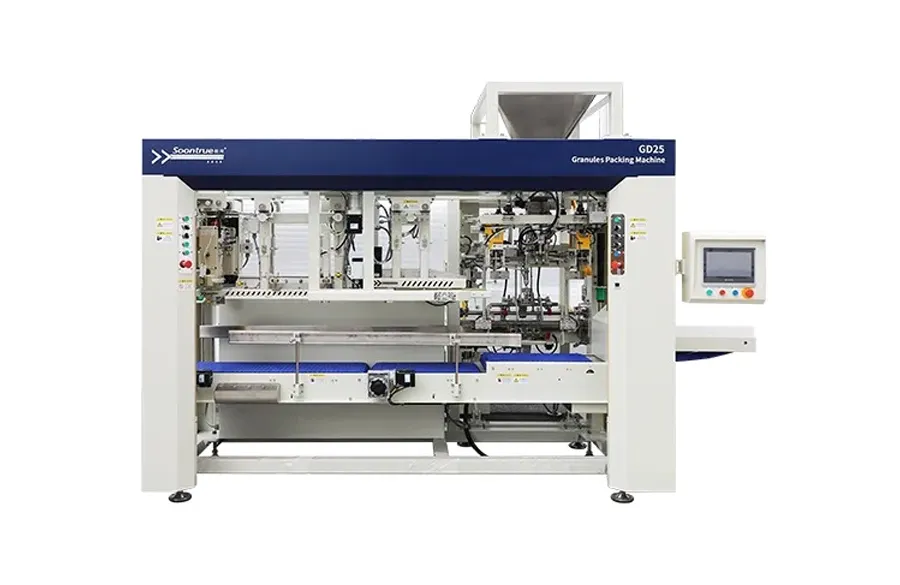
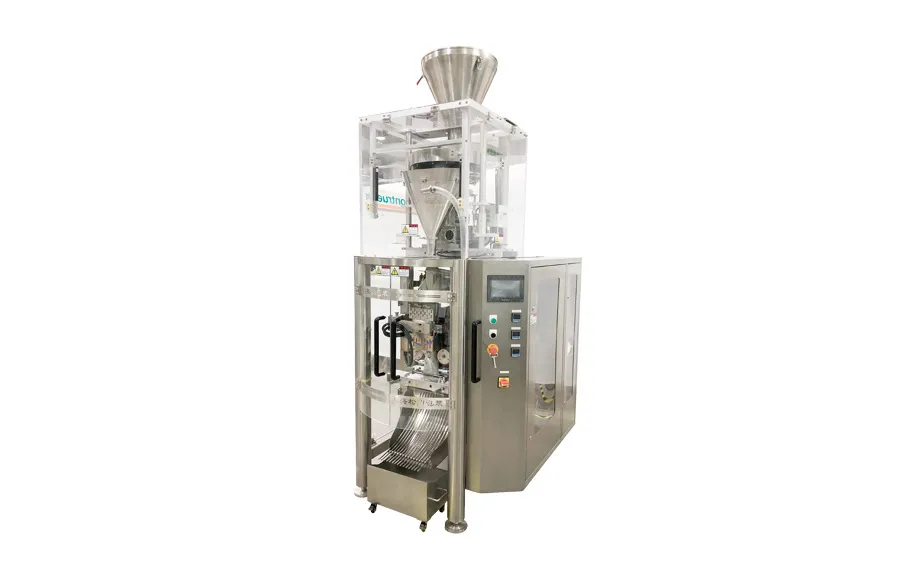
One of the most immediate and measurable benefits of upgrading is the sheer output capacity. Take Soontrue’s GT25 FFS Packaging Machine as a real-world example — it handles free-flowing bulk materials like granules and pellets at speeds of up to 1,600 to 2,500 bags per hour, with a bag weight range of 10 to 50 kg. That’s up to 41 bags per minute.
For operations running two or three shifts, that kind of throughput isn’t just impressive — it’s transformative. Older bagging lines simply can’t compete. If your current equipment is creating bottlenecks downstream, an FFS packaging machine removes that constraint almost immediately.
Even for poor-flowing or powdery materials, Soontrue’s GT23 FFS Packaging Machine delivers speeds of 240 to 600 bags per hour, which still far outpaces most traditional alternatives.
Here’s a detail that surprises a lot of procurement managers when they first see the numbers: because FFS packaging machines use roll film rather than pre-made finished bags, the per-unit cost of packaging materials is noticeably lower.
You’re not paying a premium for bags that have already been formed, cut, and boxed by a third-party supplier. Instead, you’re working directly from tubular film rolls — PE, PP, or aluminum PP — and forming the bags on demand. Over the course of a year, this difference in material cost can add up to tens of thousands of U.S. dollars in savings, depending on your annual volume.
That’s not a marginal efficiency gain. For high-volume operations in the chemical, fertilizer, or plastic particle industries, it’s a genuine competitive advantage.
If your facility handles fine powders — think pharmaceutical additives, food additives, starch, cocoa powder, or yeast — dust management isn’t just an operational issue. It’s a regulatory and safety concern.
The GT23 FFS Packaging Machine was specifically engineered for exactly these environments.
Micro-hole piercing devices to release air from film bag tubes
Probe-type air release devices to reduce fluidized material volume
Dust suction hoods on bag opening cleaning devices
Dust-proof bearing sets on the bag-clamping mechanism
This level of dust control is genuinely difficult to achieve with open-mouth or manual bagging systems, and it matters enormously in food-grade and pharmaceutical environments where contamination standards are strict.
Labor costs are rising across manufacturing sectors globally, and packaging lines that still rely heavily on manual operators are increasingly exposed to that pressure. FFS packaging machines are inherently designed for automation.
The bag-forming, filling, sealing, and cutting processes all run in sequence without manual intervention between steps. Soontrue’s systems support fully automatic operation, which means your team can focus on oversight, quality checks, and maintenance rather than repetitive physical tasks.
Beyond cost savings, reducing manual handling also lowers the risk of inconsistent fills, misaligned seals, and product contamination — all of which create downstream quality issues and potential customer complaints.
For industries like pet food, agriculture, and chemical raw materials where consistent presentation and product integrity matter, that reliability is a major selling point.
Packaging accuracy directly affects your bottom line. Overfilling means product giveaway. Underfilling means customer complaints and potential regulatory issues. FFS packaging machines from Soontrue achieve a packaging accuracy of ±2‰ (two per mille), which is among the tightest tolerances available in industrial bagging equipment.
This precision holds across a wide range of bulk materials — granules, pellets, powders, flakes, and coarse aggregates — and across bag weights from 10 kg all the way to 25 kg. The GT25 and GT23 models both maintain this accuracy standard, regardless of material flow characteristics.
When you’re running thousands of bags per shift, even a small improvement in fill accuracy compounds into meaningful savings.
FFS packaging machines are genuinely versatile, but they’ve become particularly dominant in a handful of sectors:
Petrochemical and chemical industries — for plastic pellets, resins, and chemical powders
Fertilizer and agriculture — for granular fertilizers and crop protection products
Food and food chemicals — for starch, additives, salt, and similar materials
Pet food and animal feed — for kibble, pellets, and mixed feed products
Pharmaceutical and specialty chemicals — particularly for the GT23’s dust-free capabilities
If your operation falls into any of these categories, the upgrade conversation is worth having sooner rather than later.
Upgrading to an FFS packaging machine isn’t just about buying new equipment. It’s about restructuring your packaging line around a process that’s faster, more cost-efficient, cleaner, and more consistent than what most facilities are running today. The combination of high-speed output, lower material costs, dust-free operation, reduced labor needs, and tight weighing accuracy makes the return on investment case straightforward.
Soontrue’s GT25 and GT23 models represent two strong options depending on whether your materials are free-flowing or powder-based — and both are backed by a manufacturer with over 30 years of experience and more than 800 patents in packaging technology.
Q: What is the FFS packing machine full form?
A: FFS packing machine full form is Form-Fill-Seal. It refers to a machine that forms the packaging bag from a roll of tubular film, fills it with product, and seals it — all in one automated sequence.
Q: What materials can an FFS packaging machine handle?
A: FFS packaging machines can handle a wide range of bulk materials including granules, pellets, powders, flakes, and coarse aggregates. Typical products include fertilizers, plastic particles, food additives, pharmaceutical powders, animal feed, salt, and petrochemical products.
Q: How fast can an FFS packaging machine run?
A: Depending on the model and material type, speeds range from 800 bags per hour for difficult-to-handle powders up to 2,500 bags per hour for free-flowing granules. Soontrue’s GT25 model, for example, reaches up to 41 bags per minute.
Q: Is an FFS packaging machine suitable for dusty or fine powder products?
A: Yes. Models like the Soontrue GT23 are specifically designed for poor-flowing and dusty materials. They feature vacuum degassing, dual-screw metering, and built-in dust removal at the bag mouth to maintain a dust-free packaging environment.
Q: How much can you save on packaging materials with an FFS machine?
A: Because FFS packaging machines use roll film rather than pre-made bags, material costs are significantly lower. Depending on production volume, annual savings can reach tens of thousands of U.S. dollars compared to using pre-purchased finished bags.
Q: What bag materials are compatible with FFS packaging machines?
A: Common compatible bag materials include PE (polyethylene), PP (polypropylene), aluminum PP, laminated woven bags, and woven bags with PE liner, depending on the product requirements and machine configuration.
Q: What’s the difference between the GT25 and GT23 FFS packaging machines?
A: The GT25 is optimized for free-flowing bulk materials like granules and pellets, with speeds up to 2,500 bags per hour. The GT23 is designed for poor-flowing and powdery materials, running at 240–600 bags per hour.